Scaling personalized learning through AI
MY ROLE ON THE PROJECT
As the sole product designer, I led the user experience from discovery to launch, shaping the UX strategy, recommendation flows, behavioral analysis, and iteration approach in collaboration with Product and Engineering.
Learning discovery wasn’t scaling
The organization had already invested heavily in structured learning programs and content libraries. Learners could self-enroll in content, while administrators could create and assign curated learning programs.
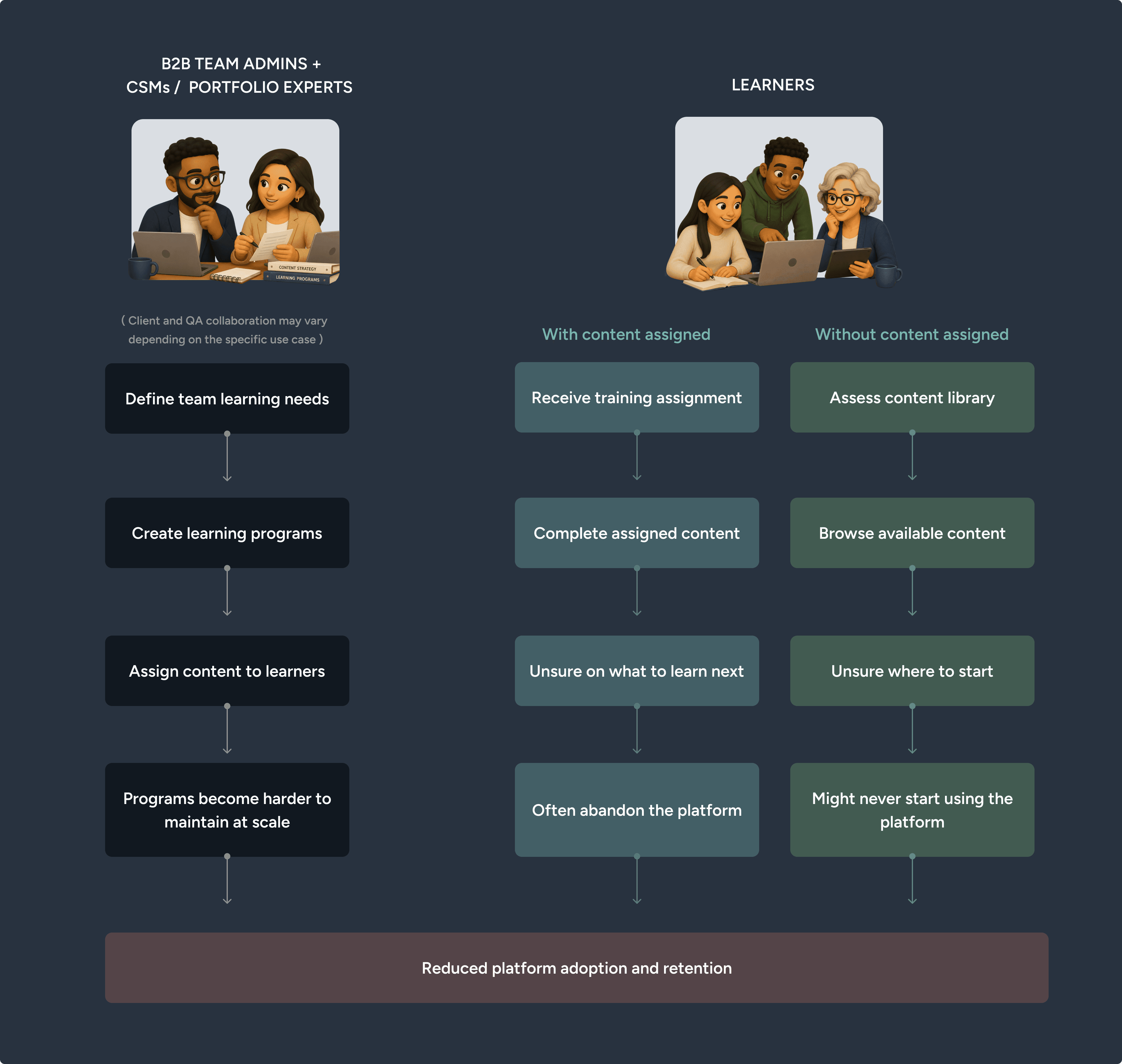
However, neither side was scaling effectively.
Portfolio Experts and administrators spent significant time curating, assigning, and maintaining learning programs, creating an operational burden that became increasingly difficult to scale.
At the same time, learners struggled to understand:
The problem was never a lack of content.
It was a lack of guidance at scale.
How might we help learners build their own development paths while reducing dependency on manual program creation and assignment?
Reframing the problem
Rather than designing another recommendation feed, we focused on understanding learner intent.
We wanted to identify when learners were most receptive to planning their development and create an experience that could generate structured learning pathways around:
Career objectives
Target skills
Development interests
Learning goals
The goal was to shift discovery from content browsing to guided development.
The platform offered access to content, but discovering relevant learning opportunities remained the learner's responsibility.

The solution
We designed an AI-powered advisor that helps learners generate personalized learning pathways based on their goals and interests.
Instead of relying on administrator-created programs, learners could assemble more relevant and goal-oriented development journeys for themselves.
BEFORE:
AFTER:
Leveraging existing AI capabilities
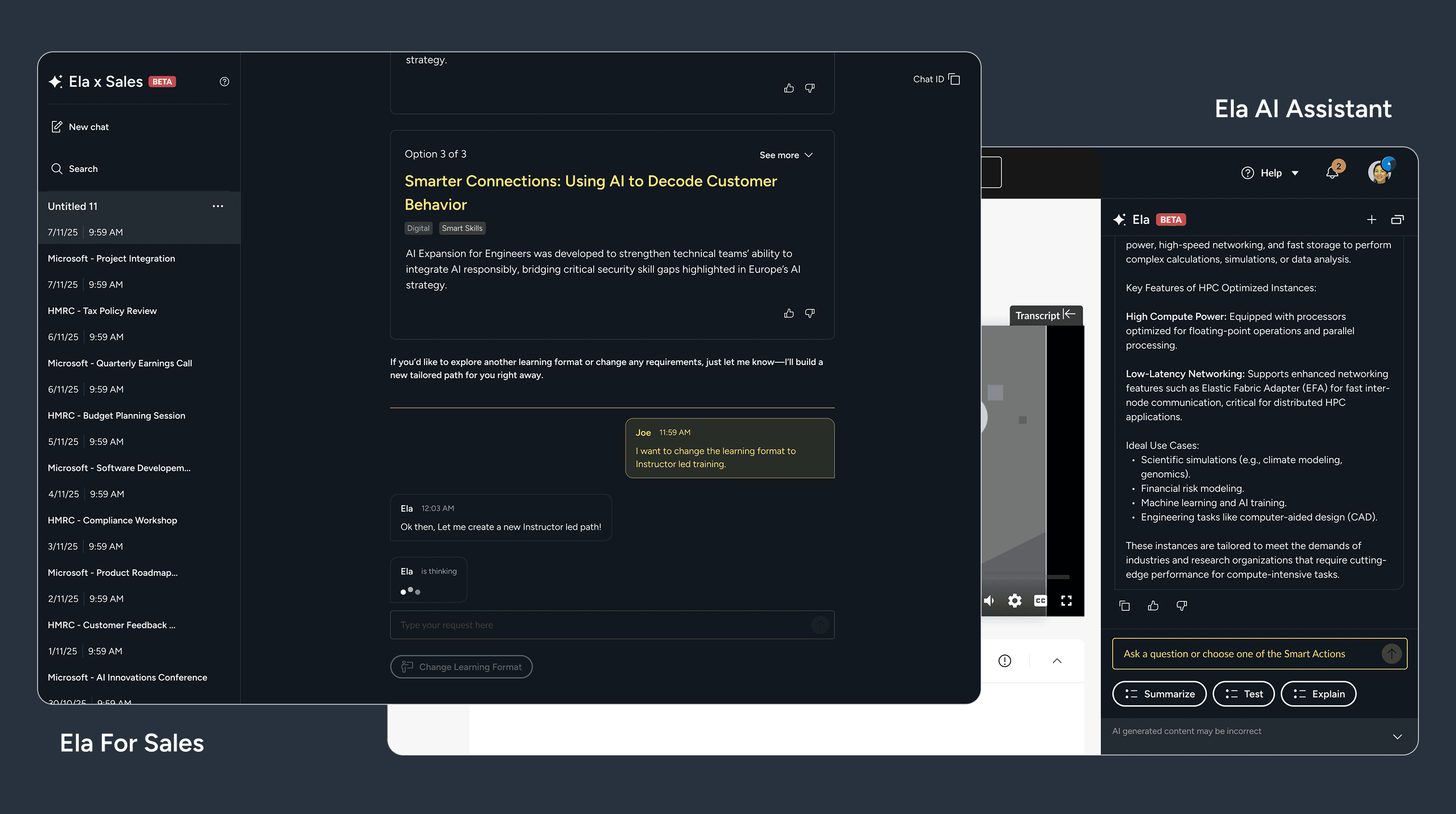
One of the key product decisions was building on existing AI infrastructure rather than creating entirely new systems from scratch.
The team adapted recommendation capabilities previously developed for the Sales workflow while aligning the experience with an existing AI learning assistant pattern already familiar to users.
The approach allowed us to accelerate delivery, reduce implementation risk, leverage proven recommendation logic, maintain UX consistency across AI experiences and validate the concept faster.
To increase the likelihood of meaningful engagement, we introduced the Advisor at moments where learners were most likely to be thinking about their development.
We focused on two key touchpoints:
The Dashboard, the platform's most visited page and the primary entry point for many learners.
Course completion moments, including when learners revisited completed course pages, where they were naturally evaluating their next learning step.
These touchpoints represented the strongest opportunities to connect learners with personalized guidance and content discovery.

What we learned after launch
Approximately 80% of users who opened the advisor never sent a message.
Initially, this created tension because overall engagement with the feature appeared strong. To better understand the disconnect, I reviewed behavioral analytics and screen replays across multiple entry points.
THE DATA REVEALED THAT
While it was tempting to conclude that recommendation quality could be the issue, the research pointed to something else, and it was quite humbling as a designer.
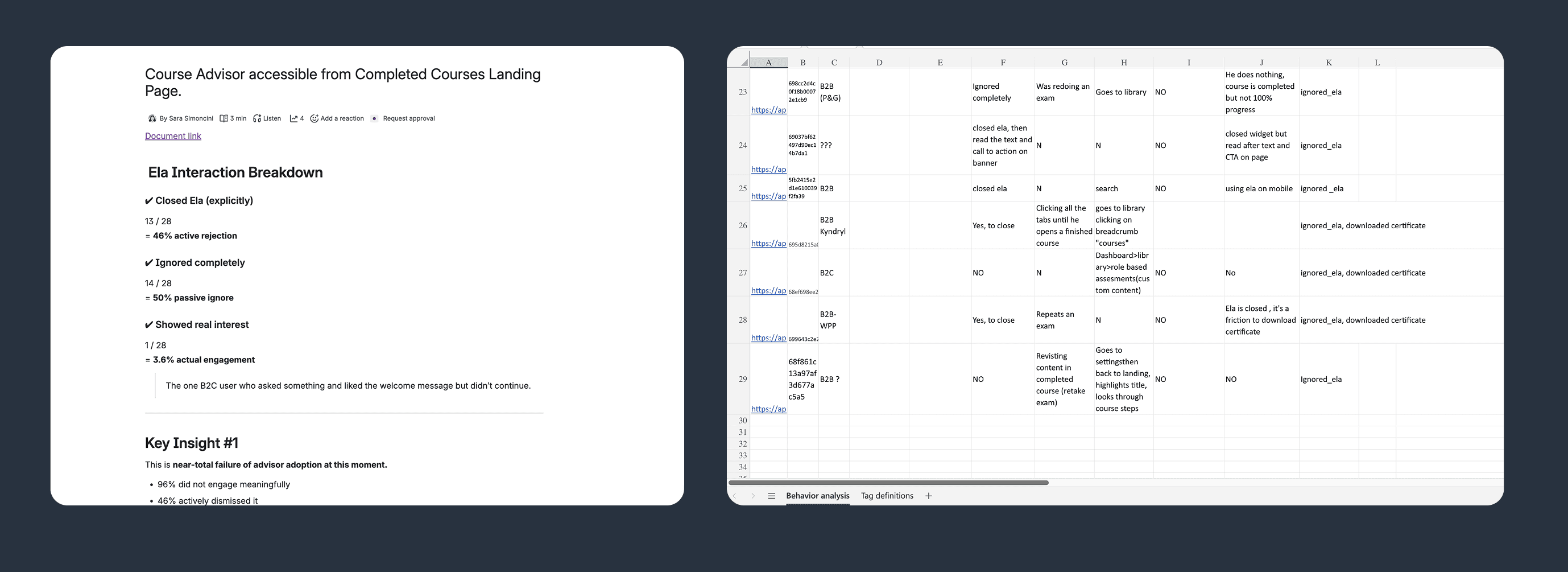
The issue wasn’t recommendation quality. It was context.
USERS COMPLETING COURSES WERE TYPICALLY
They were not actively planning what to learn next, so the content recommender was appearing at the wrong moment in the learner journey.
We were offering the right tool at the wrong moment.
One insight became particularly important: Once users meaningfully engaged with the advisor, 76% created a learning plan.
This changed our interpretation of the problem entirely.
The recommendation experience itself appeared valuable. The challenge was identifying the right moment to introduce it.
This reframed future experimentation around timing, placement, learner mindset, and contextual intent rather than recommendation logic alone.
To validate this hypothesis, we made a small but important adjustment to the course completion experience.
What we changed immediately
Behavioral data suggested that learner intent at course completion was often different from what we had initially assumed.
Rather than removing the Advisor from this touchpoint entirely, we changed its default state from expanded to collapsed.
This allowed learners to engage with the Advisor when relevant while reducing friction for users visiting the page for other reasons, such as downloading certificates or revisiting completed courses.
The goal was to preserve access to personalized guidance without interrupting users whose intent was not content discovery.
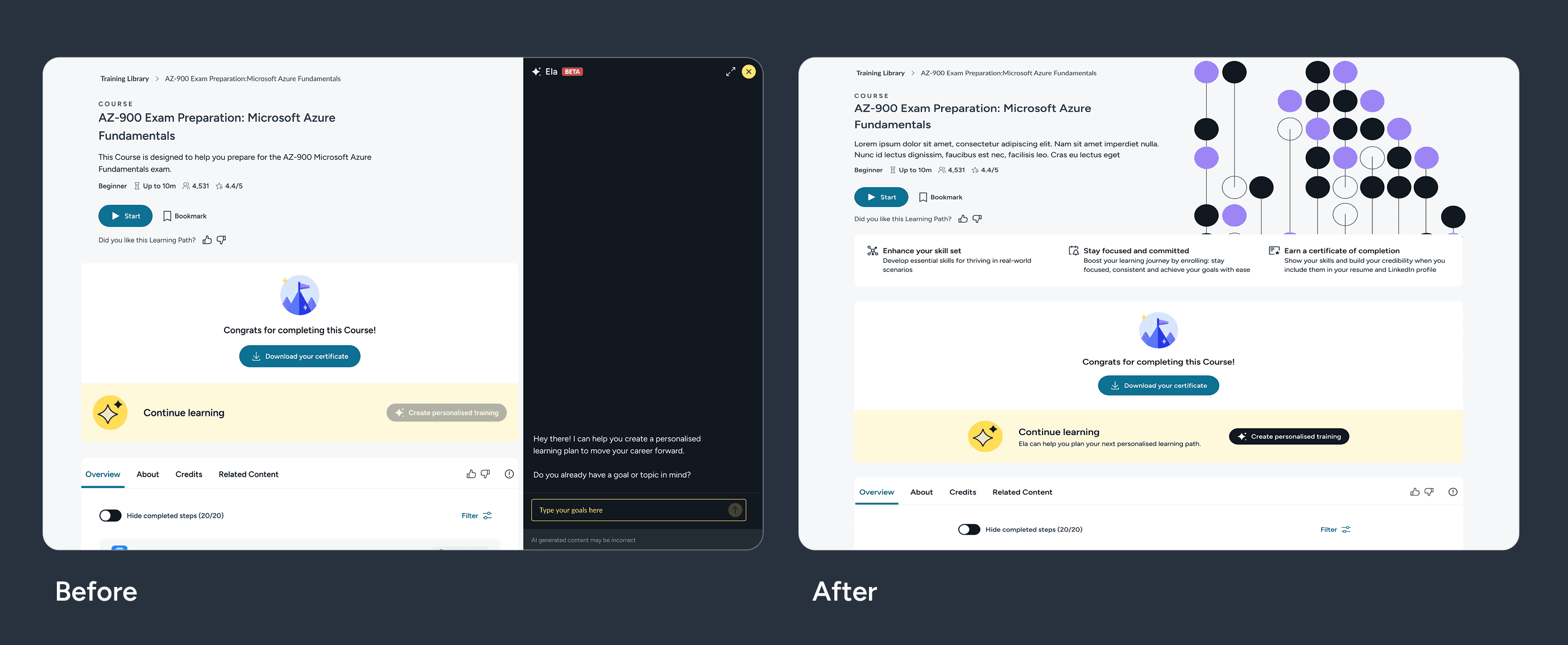
The change gave us a more accurate picture of learner behavior.
While overall engagement decreased, the data became less influenced by users who had no intention of interacting with the Advisor in the first place.
This helped us confirm that the issue was neither recommendation quality nor a lack of trust in AI.
Instead, the challenge was contextual intent.
When learners actively chose to engage with the Advisor, they consistently found value in the experience, reinforcing that the recommendation system itself was working as intended.
The outcome
The initiative transformed learning discovery from a workflow dependent on manual curation into a scalable self-service experience.
70%
Retention on personalized AI-generated pathways VS 24% on direct content library enrollment
Most importantly, it demonstrated how AI could simultaneously address a business challenge and a user challenge: reducing the manual burden of program creation and assignment while helping learners discover more relevant content and stay engaged for longer.
Final thoughts
This project reinforced my idea that AI alone does not create meaningful product experiences.
The most impactful design decisions came from: understanding learner intent by identifying the right contextual moments.
The biggest lesson was that recommendation quality was not the primary constraint. Timing and context within the learner journey had a far greater impact on adoption and engagement.
Check out more projects
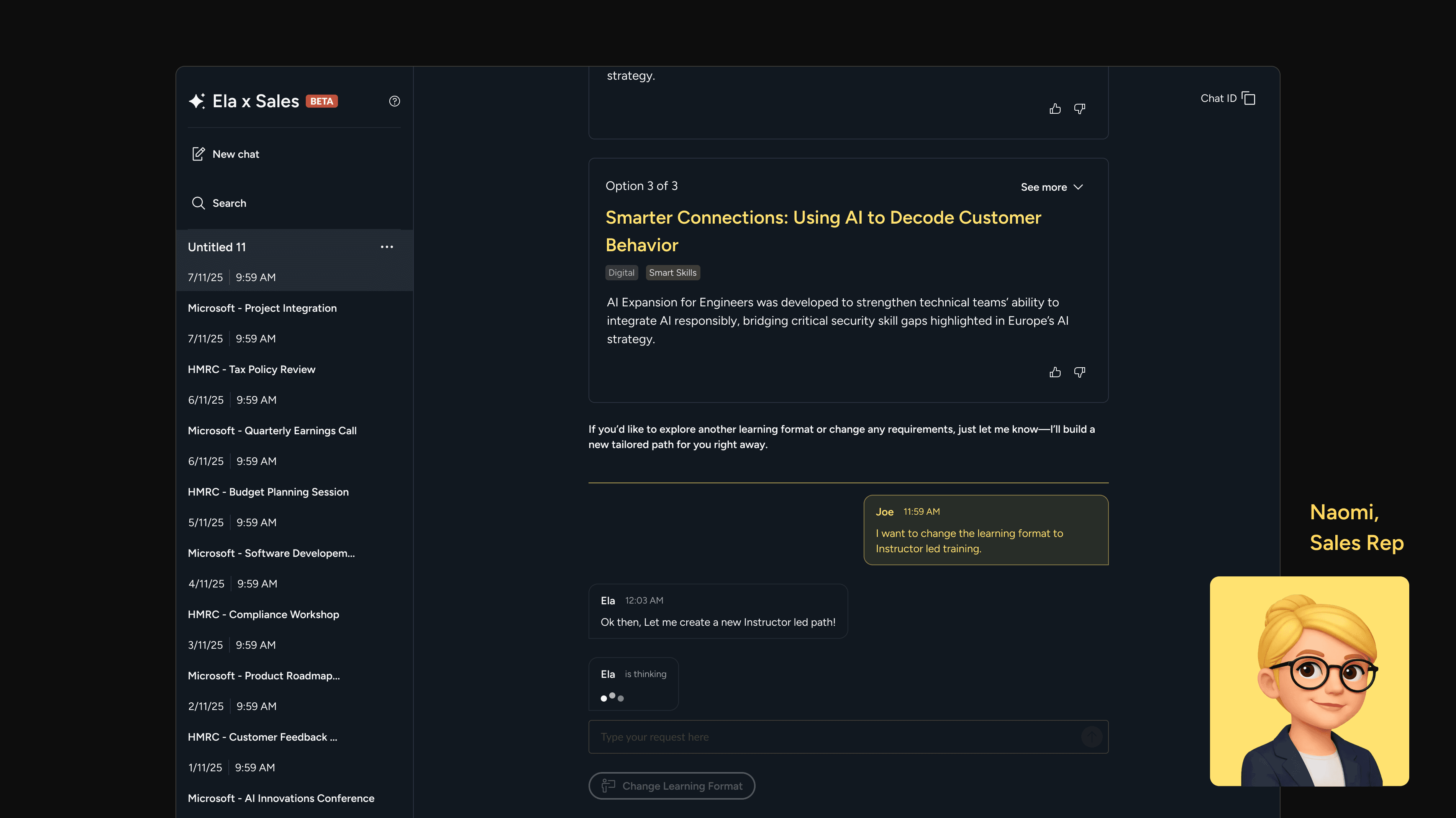
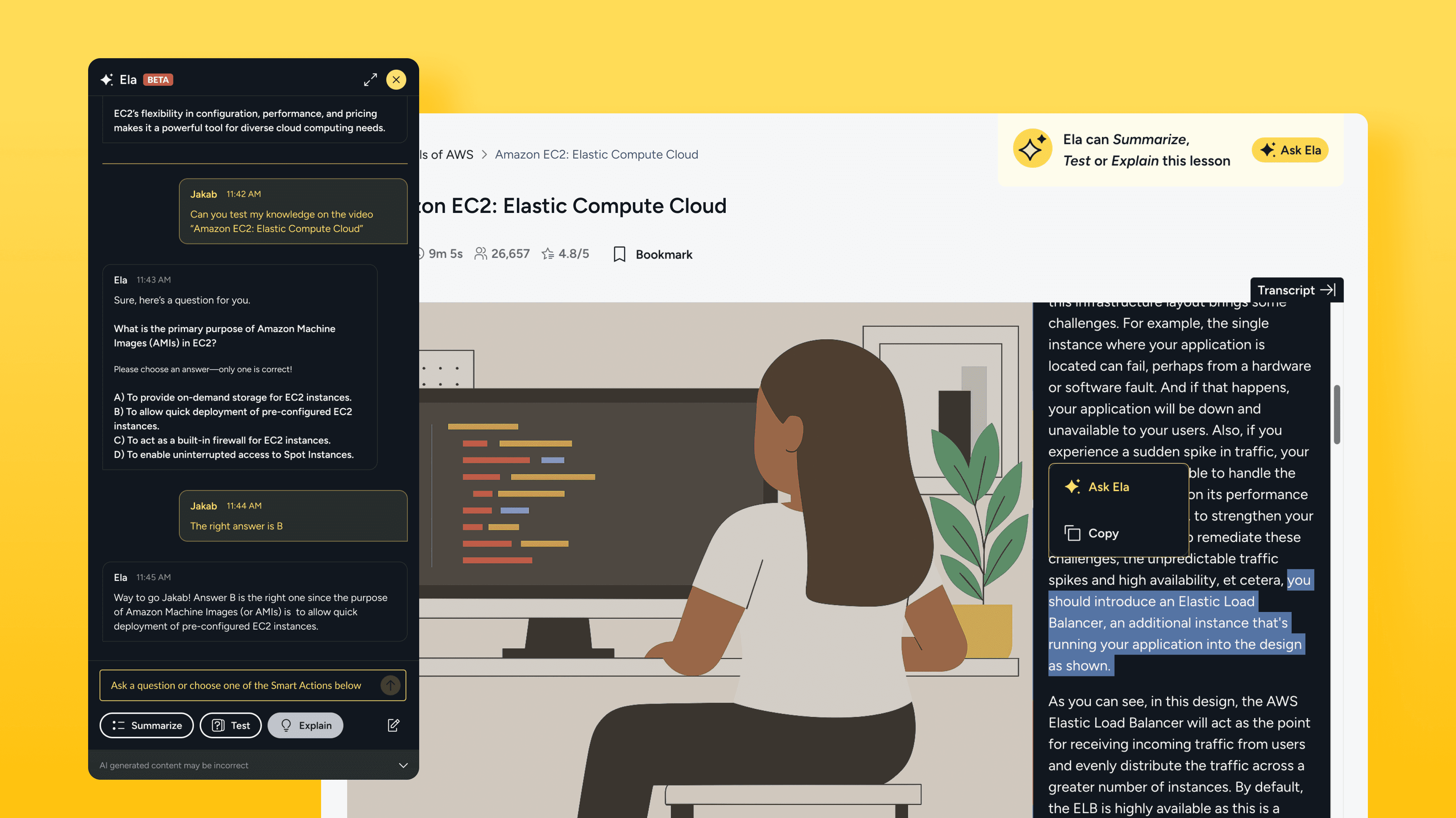
How I've helped QA users learn more confidently with an AI assistant.
I led the end-to-end design of Ela, QA’s AI-powered learning assistant, transforming an inherited prototype into a trusted and scalable product in just two months. Designed to reduce friction and support learning momentum, Ela is now adopted by 80+ client accounts, holds a 4.5/5 satisfaction score, and has influenced the development of new AI capabilities across the platform.
4.5/5 Avg. Rating
1,178 Client Accounts
+34% Adoption Growth
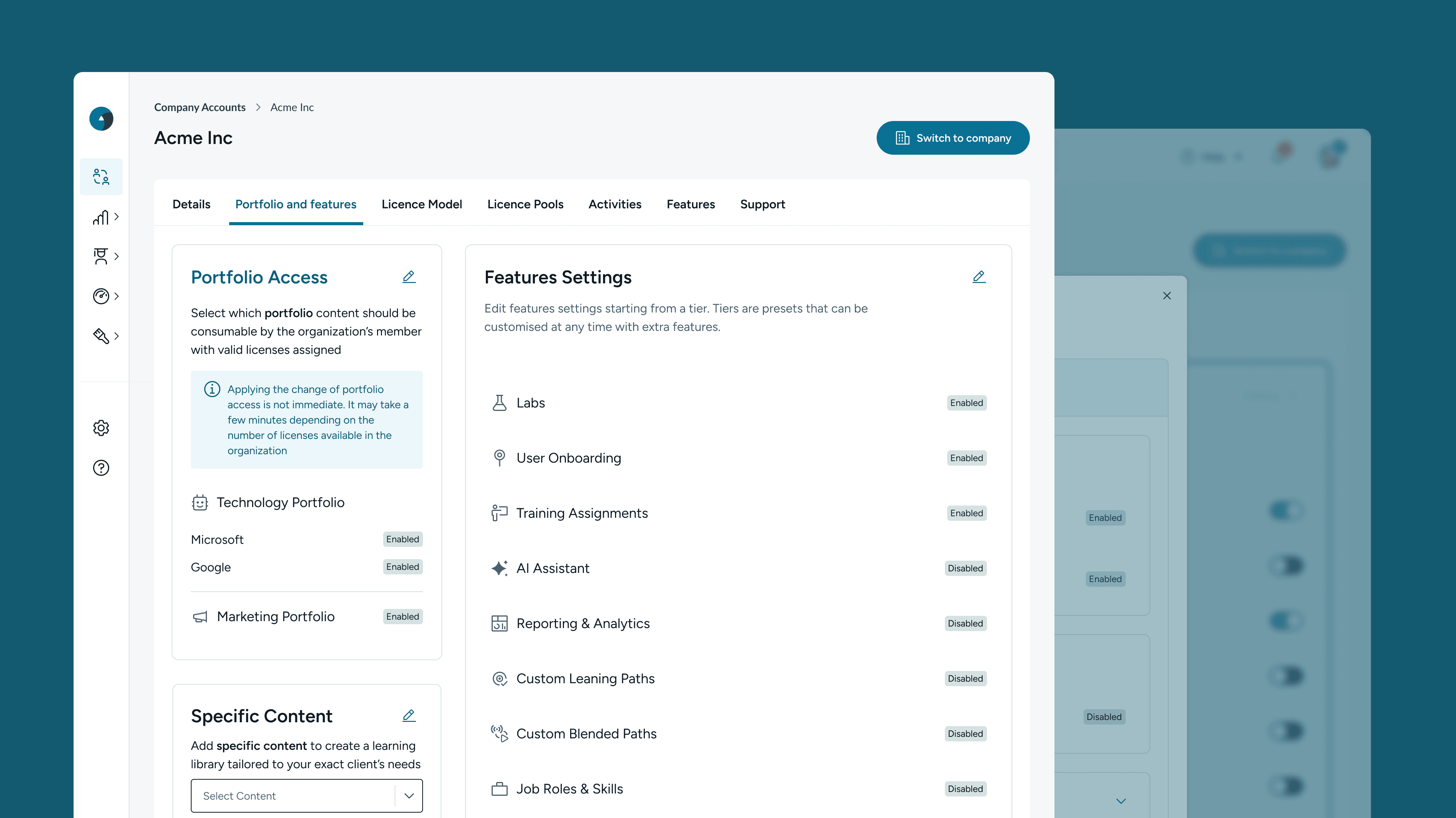
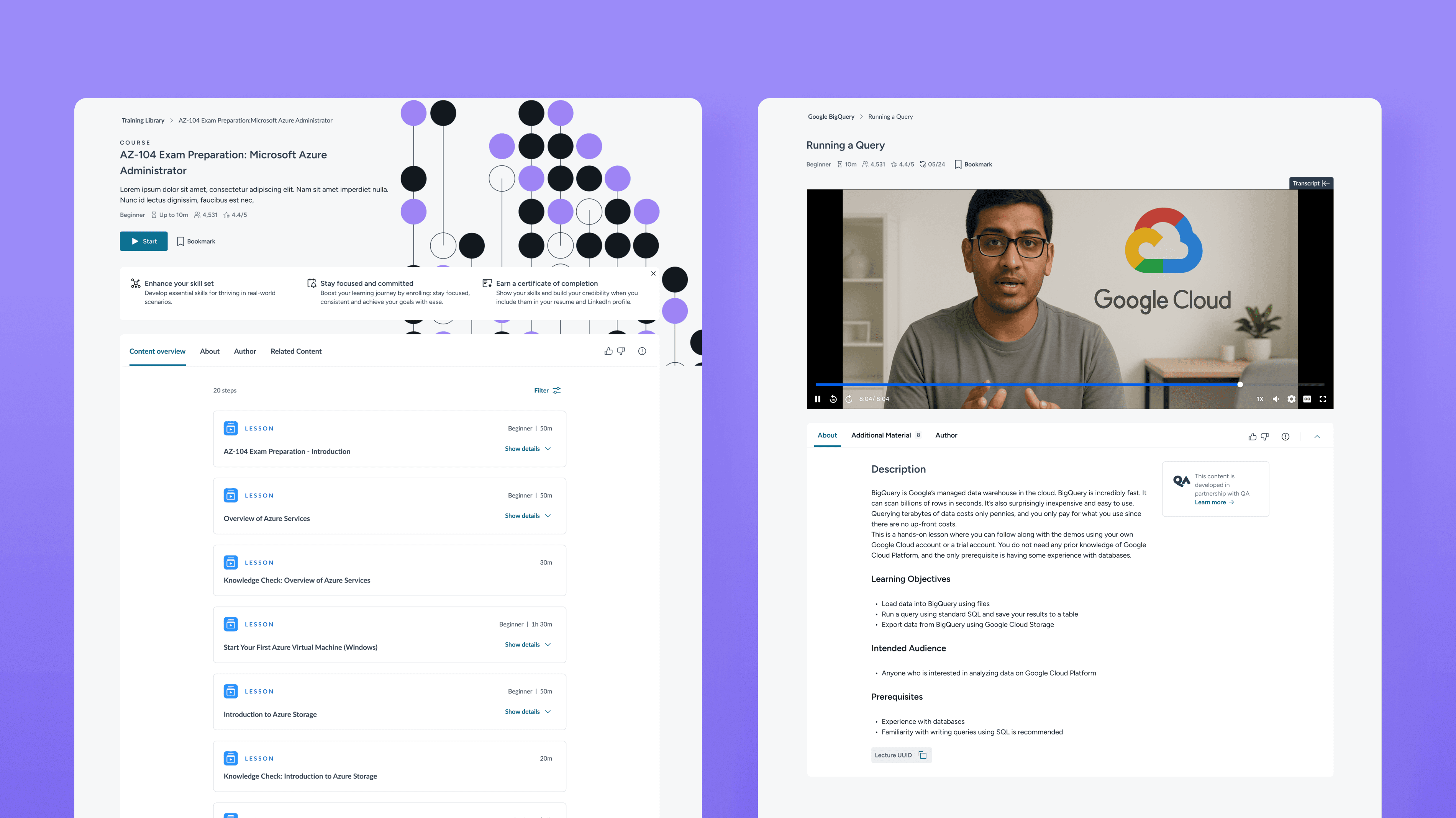
How I helped Circus Street learners feel at home after a platform transition, without increasing support burden.
I unified QA Learning’s Course and Lesson experience during the merger of Circus Street and Cloud Academy into a single platform, helping Circus Street learners adapt to a more complex UX without increasing support burden or disrupting engagement.
0 increase in helpdesk tickets: smooth client transition
Users relied less (-20%) on secondary tabs after restructuring page hierarchy
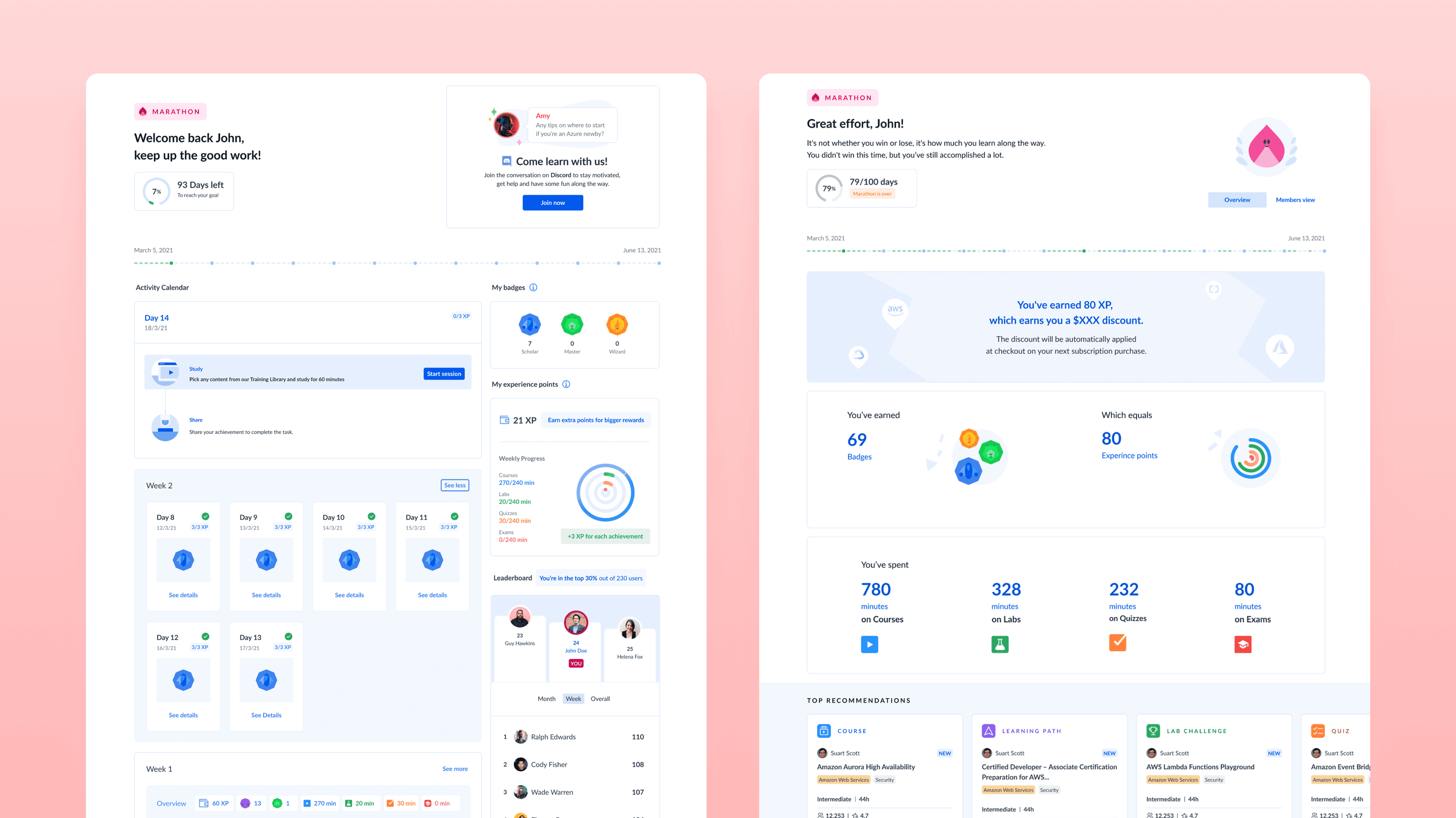
How I gamified learning at Cloud Academy boosting user motivation and MoM cashflow.
I designed a 3-month challenge that increased engagement, reduced churn, and boosted cashflow. 20% of participants stayed active three months after—well beyond typical subscription periods.
+18% increase in MoM upfront cashflow
1,178 Client Accounts
+34% Adoption Growth